01Winged
Tiger Butterfly
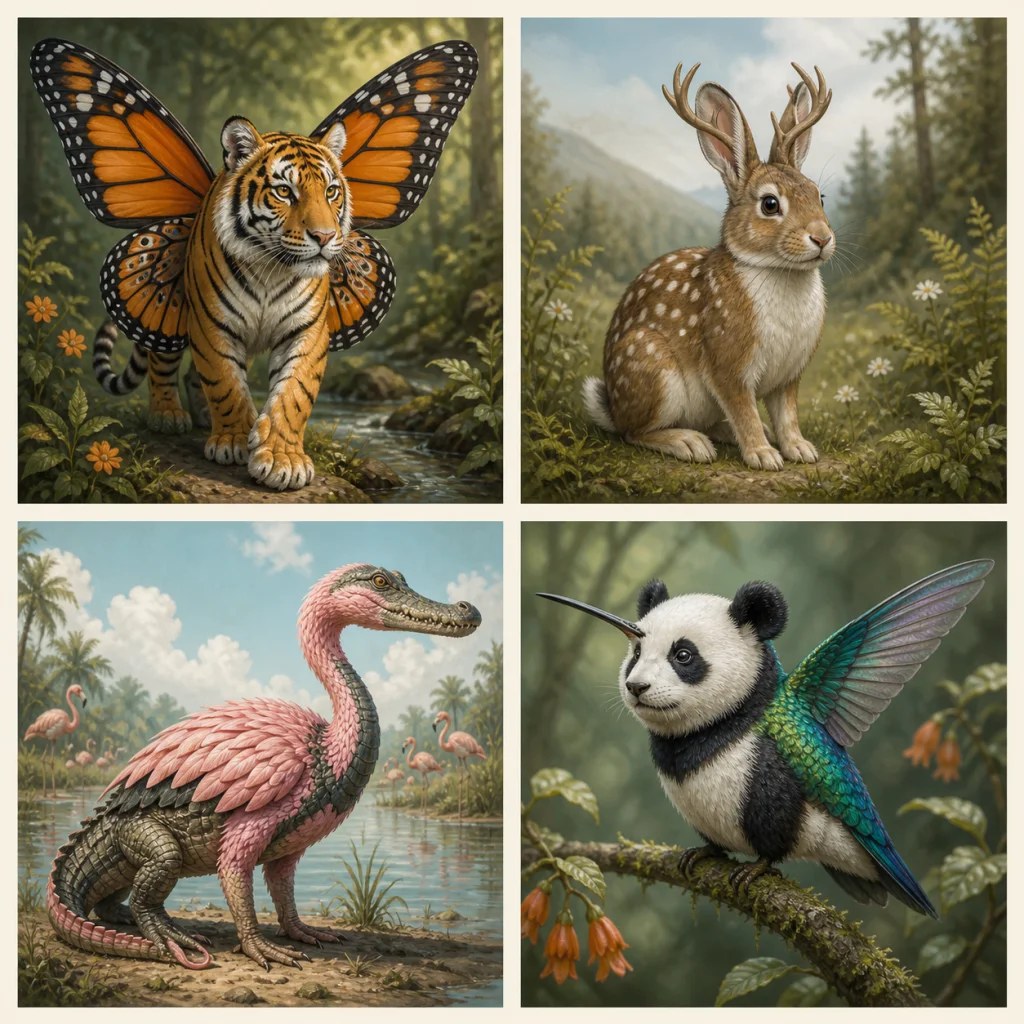
A tiger body anchors the anatomy while monarch-like wings echo the orange-and-black coat pattern.
Two species · one coherent anatomy · original creature design
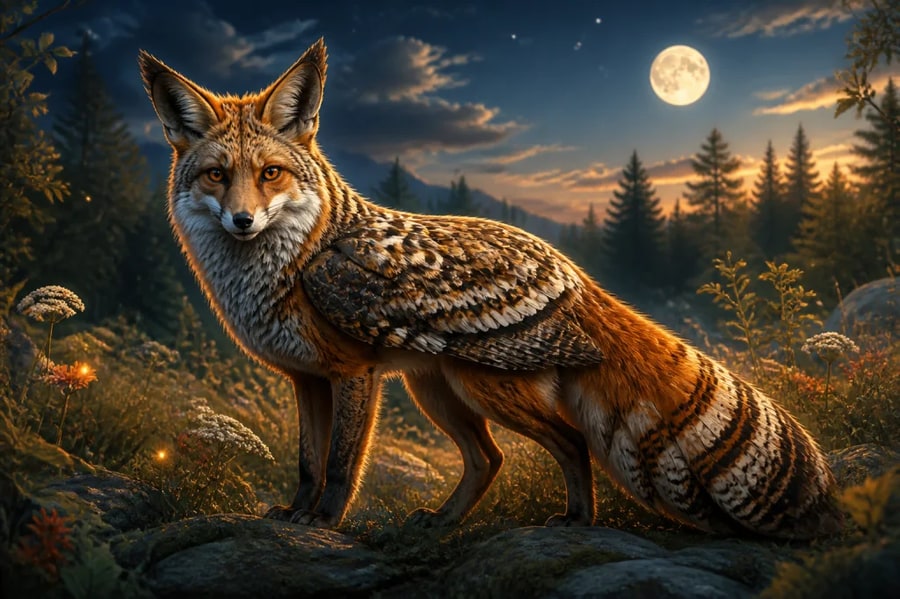
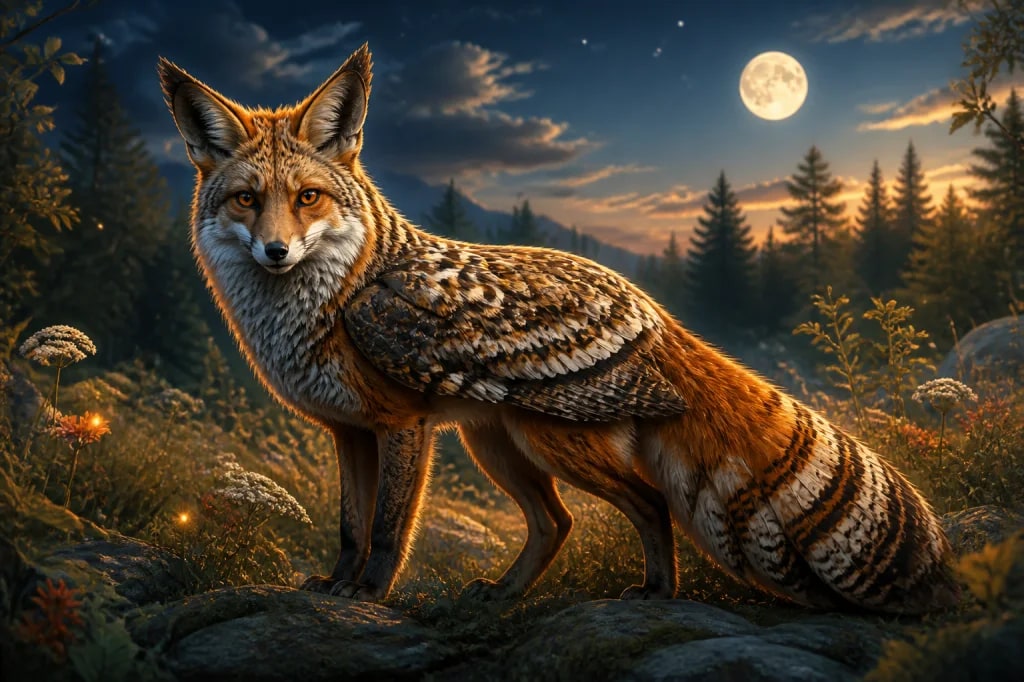
Combine two animals into one original hybrid creature. Direct the anatomy, markings, habitat, mood, and illustration style to create coherent fox-owl, tiger-butterfly, or entirely unexpected species.
Two species · one coherent anatomy · original creature design
01 / Visual directions
A convincing animal mashup integrates structure, surface, and behavior. Decide which species supplies the body plan and which contributes wings, antlers, feathers, color, or movement.
A tiger body anchors the anatomy while monarch-like wings echo the orange-and-black coat pattern.
Compact rabbit proportions gain delicate antlers and spotted markings for a gentle woodland creature.
Reptile structure and pink plumage combine into an eccentric wetland animal with a readable silhouette.
Panda facial markings meet iridescent feathers and a long beak in a compact tree-perching species.
02 / Why it works
Tell the model which animal provides the torso, limbs, head, and scale so the hybrid has a stable structure.
Add wings, antlers, feathers, scales, tails, markings, or beaks where they can connect naturally to the body.
Use meadow, desert, reef, canopy, tundra, or fantasy environments to explain the creature's palette and behavior.
Create natural-history plates, realistic wildlife portraits, storybook art, playful stickers, or game concept references.
03 / Three-step workflow
Keep the source clear, describe one strong direction, then refine the output with deliberate changes.
Choose a primary body plan and a second animal with distinctive traits worth integrating.
Name the head, body, limbs, surface texture, markings, habitat, and visual style you want.
Check for extra limbs or awkward joins, then refine toward a cleaner, more believable creature.
04 / Questions
It combines visual traits from two or more animals into a new original creature. You can direct the dominant body plan, head, surface texture, markings, habitat, mood, and illustration style.
Pair one animal with a strong body silhouette and another with a distinctive trait such as wings, antlers, scales, stripes, or a beak. Shared habitat or color can help the result feel cohesive.
Specify one coherent skeleton, a fixed number of legs and wings, and which species controls each body region. Ask for natural attachment points, balanced weight, and no duplicated anatomy.
Yes. Upload a clear pet photo, preserve recognizable markings and face shape, then add selected traits from a second animal. Avoid changing every feature if you want the pet to remain identifiable.
Try realistic wildlife photography, natural-history illustration, watercolor storybook art, clay sculpture, paper cut, or clean game concept art. The habitat and lighting should support the chosen medium.
They work as creature concepts, story prompts, tabletop characters, classroom creativity exercises, profile art, or playful social content. Review the rights for any uploaded source images before commercial use.
05 / Keep exploring
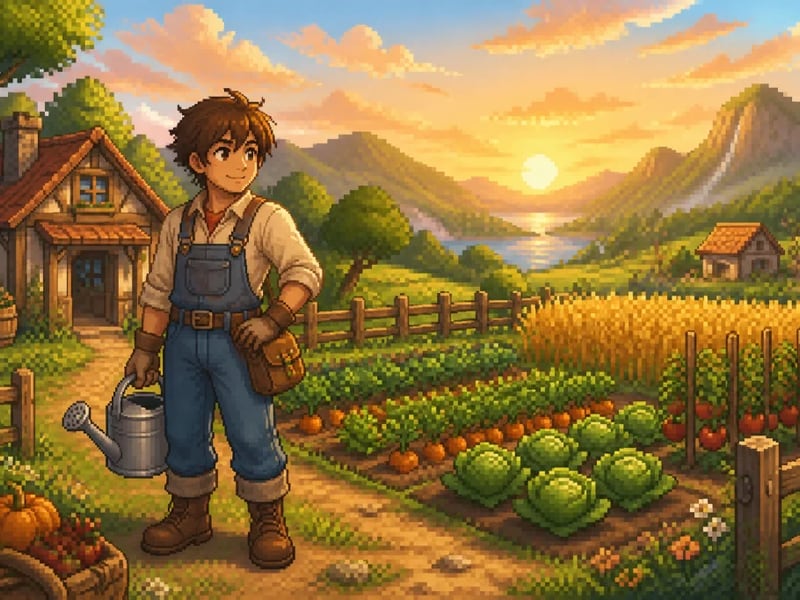
Turn a portrait into an original cozy-farm pixel character. Build a warm, game-inspired avatar with expressive features, practical outfits, and a storybook countryside setting—without copying an existing character.
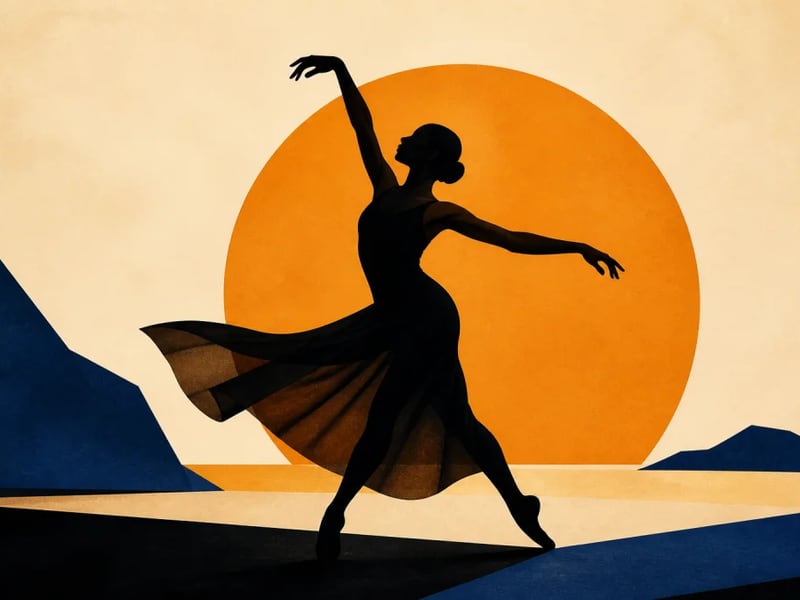
Turn a portrait, pet, object, or action photo into a clean silhouette. Preserve the identifying outline while simplifying interior detail for profile art, posters, crafts, and graphic compositions.
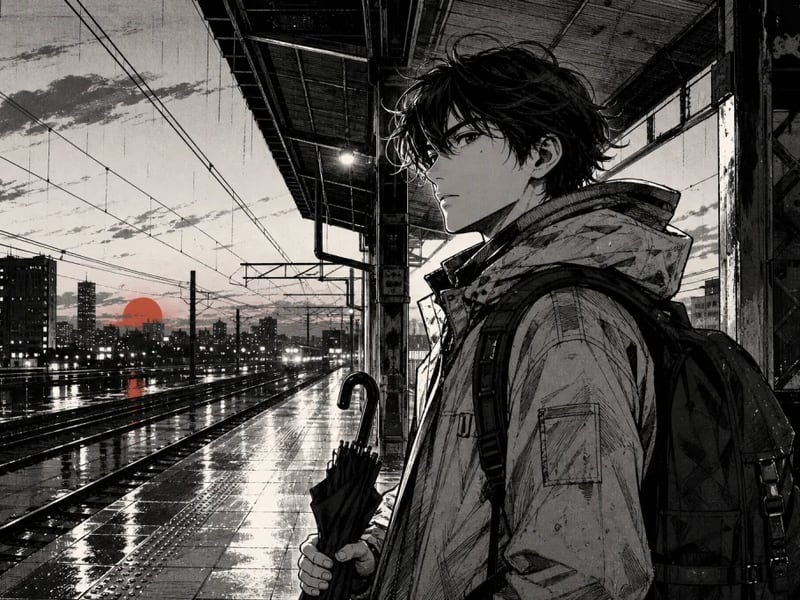
Create original manga-style characters and scenes from a photo or written idea. Direct the inking, screentone, expression, camera angle, and story mood without copying a named series or artist.
Choose two animals, decide how their traits connect, and generate an original hybrid with a world of its own.
Start creating